Category: Business

  • Inside the Ozark Trail Butane Stove Recall at Walmart and What Owners Should Do Now

    Inside the Ozark Trail Butane Stove Recall at Walmart and What Owners Should Do Now

    A small green stove that sells for less than a tank of gas has turned into one of the more serious camping gear recalls in recent memory. If you bought a single burner butane stove from Walmart in the last few years, it is worth five minutes of your time to check it.

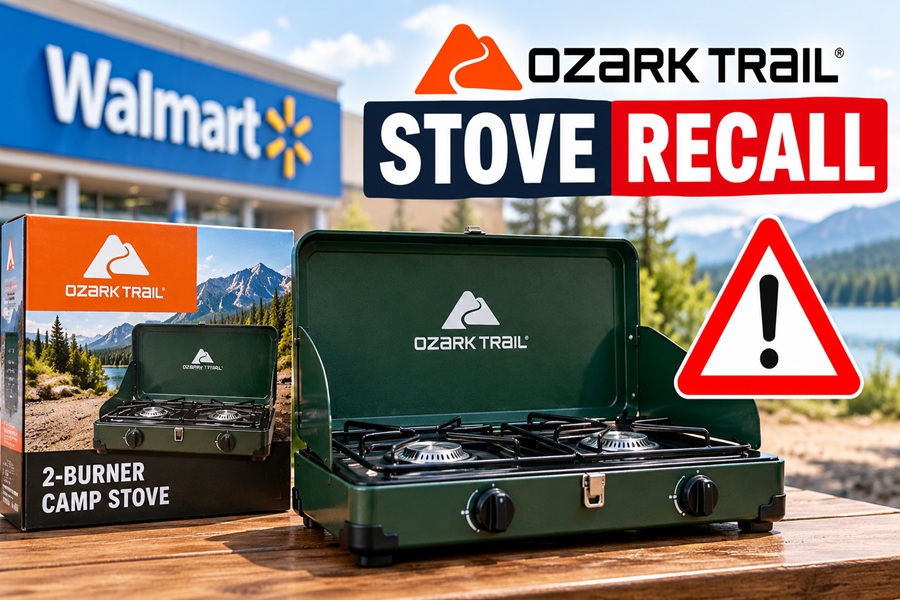
    On November 26, 2025, the U.S. Consumer Product Safety Commission (CPSC) announced a recall of about 201,000 Ozark Trail Tabletop 1 Burner Butane Camping Stoves. The reason is blunt. The stoves can explode or catch fire, creating a burn and fire hazard for anyone using them.

    The Stove in Question

    Ozark Trail is Walmart’s in house outdoor brand, and this particular stove was one of its cheapest cooking options. Here is how to recognize it.

    • Name: Ozark Trail Tabletop 1 Burner Butane Camping Stove
    • Model number: BG2247A1
    • Color: Dark green with an orange “Ozark Trail” logo on the front
    • Where to find the model number: On a gray label inside the fuel compartment, where the butane canister sits
    • Where it was sold: Walmart stores nationwide and Walmart.com
    • When it was sold: March 2023 through October 2025
    • Price: Roughly $8 to $45

    The stove was imported and sold by Walmart and manufactured by China Window Industry Co. The recall covers only model BG2247A1. According to the CPSC notice, other Ozark Trail stove models are not part of this action.

    How Many People Were Hurt

    Before the recall, the manufacturer had received 26 reports of the stoves exploding or catching fire. Sixteen of those reports involved injuries, including second degree burns.

    Those numbers may sound small next to 201,000 units sold. But a butane stove is usually used at arm’s length, often at a picnic table with kids nearby or inside a tent vestibule during bad weather. When a pressurized fuel canister fails in that setting, the damage happens in seconds.

    The public notice does not spell out a detailed cause. Some coverage has pointed to a failure in the stove’s internal structure that allows it to rupture or ignite during normal use. Whatever the exact mechanism, the official instruction is the same for every owner.

    What Walmart and the CPSC Want You to Do

    The steps are simple, and there is no cost to you.

    1. Stop using the stove right away. Do not try to test it, repair it or use it “one last time” on a trip.
    2. Remove the butane canister carefully and store it away from heat, following the canister’s own safety label.
    3. Take the stove back to any Walmart store for a full refund. You do not need to return it to the store where you bought it.
    4. Call Walmart if you have questions. The recall line is 800.925.6278, and details also appear on Walmart’s recall page and CPSC.gov.

    A receipt is helpful but recalls of this kind are generally handled without proof of purchase. If a store employee is unsure, mention the model number and the CPSC recall date.

    It Has Been Months. Does the Recall Still Apply?

    Yes. A common misunderstanding is that recalls expire after a few weeks. They do not. As the CPSC has noted in coverage of this case, product recalls usually have no end date. If you find this stove in a garage bin or a camping tote today, you can still return it.

    It is also illegal under federal law to sell a product that is under a voluntary recall made in consultation with the CPSC. That matters if you were planning to list the stove at a garage sale or on a resale app. Selling it could put someone else in danger and expose you to legal trouble.

    If You Were Injured

    If the stove exploded or burned you, the advice changes slightly. Get medical care first. Then take photos of the stove, the canister, your injuries and the scene. Some attorneys who handle product cases recommend holding on to the damaged stove rather than returning it right away, since it may be important evidence.

    You can also file a report at SaferProducts.gov, the CPSC’s public database. Reports help the agency track whether a hazard is growing.

    A Pattern Worth Knowing

    This is not the first Ozark Trail fuel related recall. Back in 1999, Walmart and the CPSC recalled about one million Ozark Trail butane utility lighters because cracked fuel cylinders could leak and ignite. The two products are very different, but the lesson carries over. Cheap gear that holds pressurized fuel deserves extra attention.

    Safer Habits for Any Butane Camping Stove

    Even if your stove is not the recalled model, the incident is a good reminder of how to use portable butane stoves safely.

    • Never use a pan that overhangs the fuel compartment. Large griddles and wide pots can reflect heat back onto the canister.
    • Cook outdoors with airflow. Tents and closed vehicles trap both heat and carbon monoxide.
    • Check the canister seat. If the canister does not lock in smoothly or you smell gas, stop.
    • Keep canisters out of hot cars. Heat raises internal pressure before you ever light the burner.
    • Store canisters separately from the stove when the trip is over.
    • Register gear when you can so recall notices reach you directly.

    Where to Keep an Eye on Updates

    The CPSC posts every recall on CPSC.gov and offers email alerts by product category. Walmart also maintains a product recall page. Signing up for CPSC alerts in the outdoor and sports categories takes less than a minute and can catch the next problem before it reaches your campsite.

    For now, the job is clear. Find the stove, check for BG2247A1 inside the fuel compartment and, if it matches, turn it in for your money back. A $20 refund is a small thing. Avoiding a burn on a family camping trip is not.
  • A Practical Walkthrough for Calculating Mileage Reimbursement in a Split Rate Year

    A Practical Walkthrough for Calculating Mileage Reimbursement in a Split Rate Year

    The math behind mileage reimbursement fits on a sticky note. Business miles multiplied by the rate per mile. What trips people up is everything around that formula: which miles count, which rate applies and how to handle a year when the rate changed in the middle.

    That last point is not hypothetical. In 2026 the IRS raised its rate partway through the year, so anyone calculating reimbursement this year needs two numbers instead of one.

    The Basic Formula

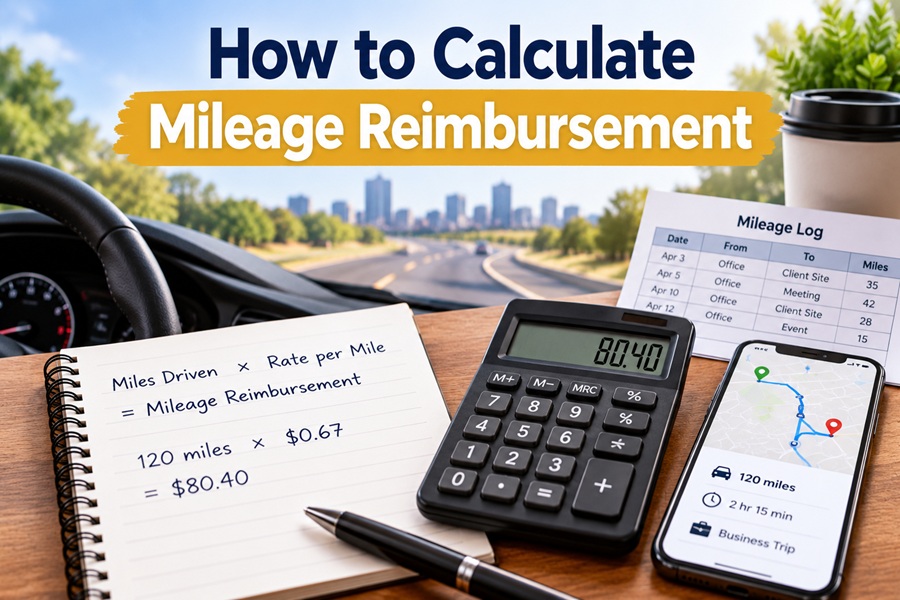
    Reimbursement = Business miles driven × Rate per mile

    If you drove 300 business miles and your employer reimburses at 76 cents, you would receive:

    300 × $0.76 = $228

    Simple. Now for the details that decide whether that number is right.

    Step One: Know Which Rate Applies

    Most employers use the IRS standard mileage rate because reimbursements at or below it are generally tax free. For 2026 there are two business rates.

    Travel dates in 2026 Business rate Medical and qualifying military moving Charitable
    January 1 to June 30 72.5 cents per mile 20.5 cents per mile 14 cents per mile
    July 1 to December 31 76 cents per mile 23.5 cents per mile 14 cents per mile

    The IRS set the original 2026 rate in December 2025, then announced a midyear increase for travel on or after July 1, pointing to higher fuel prices. The new rate applies based on when the miles were driven, not when the expense report is submitted.

    Your employer is free to choose a lower or higher rate. A lower rate is allowed but may leave you short on actual costs. Any amount paid above the IRS rate for a given trip becomes taxable income.

    Step Two: Count Only Business Miles

    This is where most calculation errors happen. Business miles generally include:

    • Driving from your regular workplace to a client, customer or vendor
    • Traveling between two work locations in the same day
    • Trips to the bank, post office or supply store for business
    • Driving to a temporary work site away from your usual location

    Business miles do not include your normal commute between home and your regular workplace. That drive is personal, even if you make a work call on the way.

    The commute adjustment. If you drive straight from home to a client site, many employer policies subtract your normal commute distance. For example, if your usual commute is 12 miles each way and you drive 40 miles from home to a client and then 30 miles back to the office, a policy using this rule would count 40 minus 12, or 28 miles, for that first leg plus the full 30 miles to the office. Check your company policy, because practices vary.

    Step Three: Log Each Trip

    A reliable log includes the date, starting point, destination, purpose and miles. Here is a sample week for a sales representative in early July.

    Date Route Purpose Miles
    July 6 Office to Brightline Dental and back Product demo 36
    July 7 Office to supplier warehouse Sample pickup 18
    July 8 Office to Riverside Clinic to Elm Street Clinic to office Client visits 52
    July 9 Office to post office and bank Business errands 9
    Total 115

    Reimbursement at the second half rate: 115 × $0.76 = $87.40

    Worked Example: A Split Year Calculation

    Say an employee drove 4,200 business miles from January through June and 5,100 business miles from July through December.

    • First half: 4,200 × $0.725 = $3,045.00
    • Second half: 5,100 × $0.76 = $3,876.00
    • Total: $6,921.00

    If the employer mistakenly applied 76 cents to all 9,300 miles, the total would be $7,068. That extra $147 would count as taxable wages because it exceeds the rate in effect for the first half miles.

    The same logic applies to self employed people deducting business mileage on Schedule C. Using a single rate for the whole year would overstate or understate the deduction.

    Tolls and Parking Are Separate

    The standard mileage rate is meant to cover gas, maintenance, insurance, depreciation and other operating costs. It does not cover business parking fees or tolls. Those are usually reimbursed separately with receipts. So a client visit with $14 in parking and 36 miles at 76 cents would be:

    (36 × $0.76) + $14 = $27.36 + $14 = $41.36

    Other Calculation Methods Employers Use

    The cents per mile approach is the most common, but not the only one.

    Actual expense method. The driver tracks real costs such as fuel, repairs, insurance and depreciation, then applies the business use percentage. This is more common for self employed people than for employee reimbursement.

    Fixed and variable rate (FAVR). The employer pays a fixed monthly amount for ownership costs plus a variable amount per mile for operating costs, often adjusted for local fuel and insurance prices. For 2026, the IRS caps the vehicle cost used in FAVR calculations at $61,700. FAVR plans must follow detailed IRS rules but can be tax free when set up properly.

    Flat car allowance. A set monthly payment with no mileage tracking. It is simple, but it is generally taxable as wages.

    Tools That Do the Math for You

    Manual logs still work, but many drivers now use apps that track trips with GPS and apply the correct rate by date. If you use one, confirm that it switched to 76 cents for trips starting July 1, 2026. Some automated tools needed a manual update after the midyear change.

    Spreadsheet users can add a simple formula. With miles in column D and dates in column A, a formula that checks whether the date falls before July 1 and applies 0.725 or 0.76 accordingly will handle the split automatically.

    Common Mistakes to Avoid

    • Using one rate for the whole of 2026
    • Including commute miles
    • Rounding trips up or estimating from memory weeks later
    • Forgetting to reimburse tolls and parking separately
    • Submitting logs months late, which can jeopardize tax free treatment under an accountable plan

    Bringing It Together

    Calculating mileage reimbursement comes down to three habits. Log every business trip when it happens, separate business miles from commuting and apply the rate that matches the date of travel. In a normal year that means one multiplication. In 2026 it means two, and getting that split right keeps both your paycheck and your tax records accurate.