Zero in the Bank, Plan in Hand: How Startup Funding Actually Gets Approved
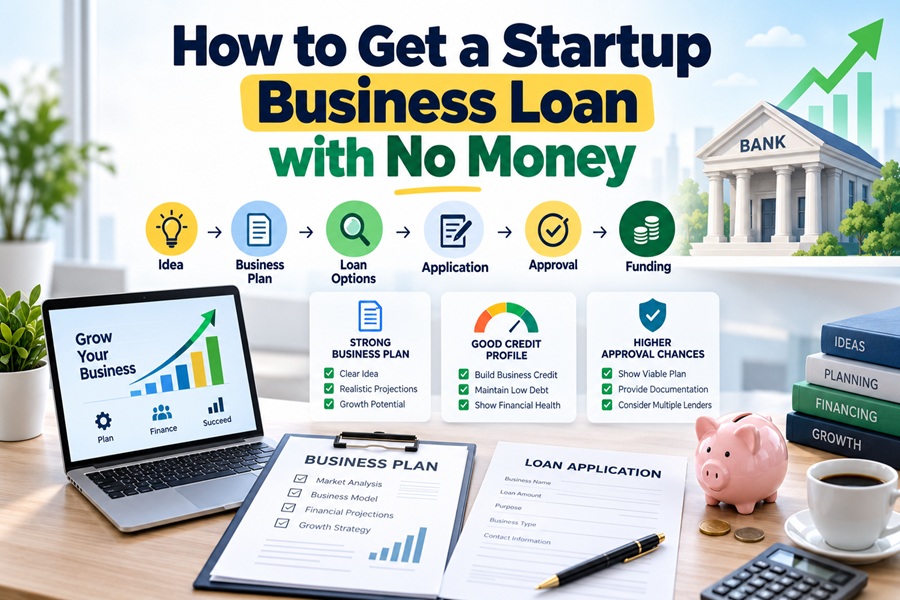
Let us clear something up first. A loan for someone with no money, no income, no collateral and no business history is mostly a marketing phrase. Lenders exist to be repaid, and with nothing to go on, they have very little reason to say yes.
That is not the end of the story, though. “No money” usually means “not much cash right now”, and there are real routes for people in that position. This article walks through them in order, from the most realistic to the least, and explains what lenders actually look for.
This is general information, not financial advice. Loan terms change, so confirm the details with the lender before you sign anything.
What lenders want to see
Even when a loan is built for startups, a lender still asks some version of four questions:
- Can this person repay the loan?
- Do they have a credible plan?
- Is there anything backing the loan if it goes wrong?
- Does the borrower have some of their own commitment in the deal?
You may not have strong answers to all four. The goal is to be strong on two or three and honest about the rest.
The ladder of options
Microloans: the most startup friendly rung
In the United States, the SBA microloan program is the usual first stop for founders with little behind them. Loans go up to $50,000, but the typical amount is much smaller, around $13,000 to nearly $15,000 in the 2026 fiscal year. Repayment can stretch to seven years, and roughly a quarter or more of these loans have been going to businesses two years old or younger.
The money does not come straight from the government. Approved nonprofit community lenders issue it, and many offer coaching alongside the loan. Interest commonly falls somewhere around 8 to 13 percent, depending on the lender and your profile.
The catch: most microlenders still want some collateral, often the equipment you are buying, plus a personal guarantee. Approval can take 30 to 90 days. Credit requirements are generally more flexible than at a bank, but they are not absent.
Larger SBA loans: possible, but harder
The 7(a) program offers up to $5 million, and the Express version goes up to $500,000. Startups can qualify, but expect stricter treatment. Lenders often look for a stronger personal credit score, sometimes 700 or higher, a down payment in the range of 20 to 30 percent, and a detailed plan with realistic projections.
One helpful detail: for smaller 7(a) amounts under about $50,000, lenders often require little or no collateral. That makes a modest request easier than a big one.
Personal loans and business credit cards
Because many banks will not lend to an unproven company, founders often borrow personally. An unsecured personal loan or a business credit card needs no collateral, and approval depends mostly on your own credit record. These can work for small starting costs. But interest tends to be higher and you are personally responsible, so borrow only what you are confident of repaying.
Grants and competitions
Grants do not need repayment, which makes them attractive. They are also competitive, usually narrow in focus and slow. Many target specific groups, industries or communities. Treat them as a bonus, not a plan you depend on.
Friends, family and early supporters
Money from people who believe in you can be the most flexible. The risk is to the relationship, so put it on paper. Write down the amount, the interest if any, the repayment schedule and what happens if things are late.
Side by side
| Option | Typical size | Collateral | Best fit |
|---|---|---|---|
| SBA microloan | $500 to $50,000 | Often required | Startups with a plan and modest needs |
| SBA 7(a) or Express | Up to $5 million or $500,000 | Varies, lighter under about $50,000 | Founders with stronger credit and some savings |
| Personal loan | Small to moderate | Usually none | Good personal credit, small costs |
| Business credit card | Limited by credit line | None | Short term, fast repayment |
| Grant | Varies widely | None | Eligible niches, patient applicants |
| Family or friends | Whatever you agree | Whatever you agree | Early stage with strong relationships |
How to make a no money application stronger
You cannot invent assets, but you can reduce risk in the lender’s eyes.
Build the credit you do have. Pay down existing balances, fix errors on your credit report and avoid new applications for a few months before applying.
Put in something of your own. Even a small contribution, or unpaid hours with documented work, shows commitment.
Write a plan with real numbers. Include startup costs, expected monthly sales, break even point and a conservative forecast. A short plan with believable figures beats a long one filled with hope.
Show proof of demand. Letters of interest, waiting lists, pre orders or a handful of paying customers all count.
Start smaller than you think. Asking for what you truly need for the first phase is easier to approve than asking for the final dream.
Warning signs of a bad deal
Some offers prey on people who feel desperate. Watch for:
- Guaranteed approval before any review of your finances
- Large upfront fees before funding arrives
- Vague terms about total repayment
- Repayment structures that take a share of daily sales with very high effective costs
A legitimate lender explains rates, fees and the full amount you will pay. If they will not, walk away.
The route that needs the least borrowing
Sometimes the smartest plan is to need less money. Offer a service first and use the earnings to buy equipment. Take deposits. Rent instead of buying. Start part time while keeping a job. Many founders find that after a few months of real revenue, lenders treat them very differently, because now there is a track record to evaluate.
Keep the wider climate in mind as well. Borrowing costs remain elevated, and owners report rising expenses for goods, wages and tariffs. A loan with a high payment can sink a young business, so calculate whether your expected sales could cover the monthly bill even in a slow period.
Your next steps
- Check your credit report so there are no surprises.
- Define the smallest amount that gets you launched.
- Write a short plan with conservative numbers.
- Look into community lenders and microloan programs near you, or similar schemes outside the United States.
- Apply to more than one source, compare total costs and read every term.
No loan appears out of thin air, but a clear plan, a modest request and a little proof can open doors that look closed. Start with what you can show, ask for what you can repay, and let the business earn the next round of trust.



Leave a reply

-
Prospecting Explained for Sellers Starting From Zero
Sales prospecting is the work of finding potential customers who fit what ... -
-
-
-
-
-