What the Survivors Have in Common: Small Business Ideas That Keep Winning
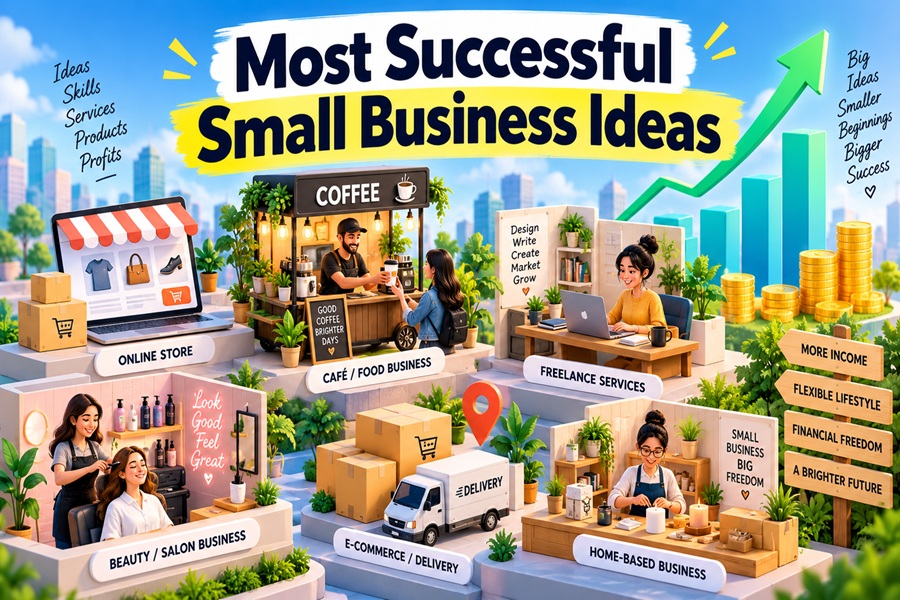
There are about 36.2 million small businesses in the United States. Together they employ nearly half of the private workforce and produce around 43.5 percent of the country’s economic output. Those numbers are impressive, but they hide the more interesting question. Why do some of these businesses quietly last for decades while others fade after a single busy season?
The answer is rarely a brilliant idea. It is usually a boring one, executed well, in a place where people keep needing it. So instead of handing you a random list, this article sorts successful small business ideas by the quality that keeps them alive.
Quality one: people need it whether the economy is good or bad
Some purchases get postponed in tough times. Others do not. A burst pipe, a sick pet, a broken laptop and a tax deadline all arrive on their own schedule.
Businesses built on this kind of demand tend to be steady:
- Plumbing, electrical work and general repairs
- Bookkeeping and tax preparation for local firms
- Home health support and elder care services
- Pet grooming, boarding and veterinary support services
- Computer and phone repair
None of these are glamorous. That is partly why they work. Competition for attention is lower, and loyal customers refer others without being asked.
Quality two: customers come back on a schedule
The strongest businesses do not hunt for new buyers every month. They build a rhythm. Lawn care, cleaning, pest control, meal prep, tutoring and subscription boxes all rely on repeat visits. A customer won over once can be worth hundreds or thousands over the years.
If you are comparing ideas, ask a plain question: how often does one customer need to buy again? Weekly or monthly beats once a year almost every time.
Quality three: trust matters more than price
In some trades, buyers are nervous. They are letting someone into their home, handing over their accounts or trusting someone with their children’s learning. In those areas, reputation beats cheap pricing. Reviews, personal introductions and visible reliability become your marketing.
Think of accounting, childcare, home renovation, tutoring, wedding planning and personal training. A small operator who answers the phone and shows up on time can compete with much larger firms here.
Quality four: one person can serve many customers
Some ideas scale because the work is repeatable. A consultant sells the same method to many clients. A course creator records once and sells again. A web designer reuses templates, and a digital marketer builds systems that handle many accounts.
This is where tools matter. AI assistants have moved quickly into everyday small business life, helping with drafting, scheduling, customer replies and research. A solo operator who uses them well can handle more clients without hiring. The gain is real, but only when a human still checks the work and keeps the personal touch that customers pay for.
Quality five: the business solves a local, specific problem
The shops and services that thrive often know their neighbourhood well. A bakery that makes gluten free bread for a community with many requests. A mobile mechanic who serves busy commuters. A tiny agency that only helps dentists with their online bookings. Specific beats generic because it is easier to explain, easier to refer and harder to copy.
How these ideas compare
| Idea | Why it holds up | Typical entry cost | Main risk |
|---|---|---|---|
| Home repair and maintenance | Constant need, strong referrals | Low to moderate (tools, vehicle) | Seasonal swings, physical demands |
| Bookkeeping services | Compliance never goes away | Low (software, training) | Needs accuracy and client trust |
| Cleaning and organising | Repeat visits, easy to start | Low | Staff turnover when you grow |
| Pet care services | Owners spend freely on pets | Low to moderate | Liability, scheduling pressure |
| Digital marketing for local firms | Every business wants customers | Low | Results must be proven to retain clients |
| Tutoring and online courses | Lasting demand for learning | Low | Needs a clear niche and credibility |
| Food production, such as catering | Strong margins on specialty items | Moderate (licences, kitchen) | Regulations, spoilage, long hours |
| Mobile services, from detailing to repairs | Convenience commands a premium | Moderate | Travel time eats into profit |
What the current climate is telling owners
Recent survey results show that most owners are feeling pressure from higher costs. More than three quarters reported rising prices for goods, services or wages, tariff related or otherwise, and finding qualified staff remains a strain. Borrowing costs are still elevated too.
Yet optimism has not disappeared. Roughly four in five small businesses expect revenue growth in 2026, with an average projected increase near 8 percent, and more than half plan to invest in equipment or upgrades. The message is that successful owners are not waiting for perfect conditions. They are cutting waste, raising prices carefully and spending on tools that save time.
Applications for new businesses also remain well above the levels seen before 2020, with more than half a million filed in some months this year. Competition for good ideas is real, which is another reason to choose a niche instead of a crowd.
The traits behind the ideas
Looking at businesses that last, certain habits show up again and again:
- They know their numbers, including what each customer costs to win and keep.
- They price for profit, not just to stay busy.
- They keep a cash cushion, even a small one, for slow months.
- They collect reviews and referrals deliberately, rather than hoping for them.
- They improve one thing at a time instead of chasing every trend.
An owner who does these five things with an average idea often beats an owner with a brilliant idea and no discipline.
Choosing yours
Begin with what you can already do. Skills you have, a network you already know and a problem you have seen up close are worth more than a fashionable category. Then test the idea cheaply. Offer it to five paying customers before you invest in anything permanent.
Next, check the numbers honestly. Can you earn enough at a price customers will accept, after costs, taxes and your own time? If the answer is yes with some room to spare, you have something worth building.
Finally, remember that success in a small business rarely arrives all at once. It looks like a steady list of satisfied customers, a calendar that fills up slowly and a reputation that begins to work while you sleep. The ideas above are not secrets. They are simply the ones where that slow build is most likely to pay off.



Leave a reply
-
Prospecting Explained for Sellers Starting From Zero
Sales prospecting is the work of finding potential customers who fit what ... -
-
-
-
-
-