Fifty Dollars and a Skill: Where a Thin Wallet Can Still Build a Business

Most advice about starting a business quietly assumes you have savings sitting somewhere. Rent a space, buy stock, hire a designer, run some ads. If your bank balance looks more like a rounding error than a runway, that advice feels like it was written for somebody else.
It was. So here is the version written for everyone else.
The scarce thing is not cash
When people say they cannot start because they have no money, what they usually lack is a first customer. Money only becomes necessary when you build something before anyone has asked for it. Flip that order, find the buyer first and spend afterwards, and the budget needed shrinks dramatically.
This matters more than ever. In May 2026 alone, roughly 524,000 new business applications were filed in the United States, and a large share of those are one person with a phone and a plan. At the same time, owners keep reporting that rising costs for goods, services and wages are their biggest financial headache. In a year like this, a business with almost no overhead is not a consolation prize. It is a genuine advantage.
Three rules before you spend a single dollar
Sell your time or skill first. A service has no inventory, no storage and no minimum order. You can be paid on Friday for work you did on Wednesday.
Get paid before you build. Take a deposit, a pre order or a booked slot. Customers who pay early tell you the idea works faster than any survey.
Let revenue fund the upgrades. The logo, the website and the fancy software can wait until the first few invoices clear.
What a small budget can realistically start
The ranges below are rough, and your local market will move them, but they show how little the entry ticket can be.
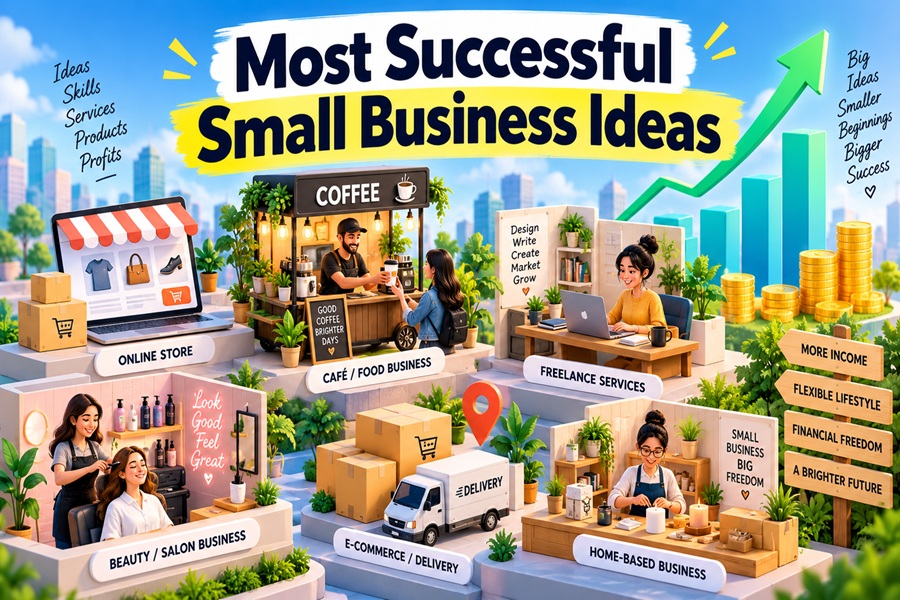
| Business | Typical startup cost | What you actually sell | Where the first customer usually comes from |
|---|---|---|---|
| Freelance writing or editing | $0 to $50 | Words, polished and on time | Past employers, local businesses, online job boards |
| Virtual assistance | $0 to $100 | Inbox, calendar and admin relief | Busy professionals you already know |
| Social media management | $0 to $100 | Consistent posting for local brands | Cafes, salons, clinics nearby |
| Tutoring | $0 to $50 | Exam prep, language or skills coaching | Parents, school groups, community boards |
| Home or office cleaning | $50 to $200 | Reliable weekly visits | Neighbours, property managers |
| Pet sitting and dog walking | $0 to $100 | Peace of mind for pet owners | Local groups, vet clinic boards |
| Reselling thrifted goods | $50 to $200 | Finds, cleaned and well photographed | Online marketplaces |
| Mobile car washing | $100 to $300 | Convenience at the customer’s door | Apartment complexes, offices |
| Print on demand designs | $0 to $100 | Original designs on products made after each order | Niche communities and social posts |
Notice that almost every row starts with a person or a skill, not a product. That is the pattern worth copying.
Three of these, looked at honestly
The service route
Take freelance writing, virtual assistance or social media work. The cost is close to zero, and the real investment is a sample or two that proves you can deliver. Make one strong example, send it to ten people who might need it, and ask a direct question: can I help with this? Expect a lot of silence. One reply is enough to begin.
The catch is that your income is tied to your hours. That is fine at the start. Once you have steady clients, you can raise prices, specialise or hand off the smaller tasks.
The resale route
Buying low and selling higher is old as trade itself, and it still works because most people will not do the legwork. The skill is not shopping, it is knowing what sells. Spend a week just watching sold listings, not active ones, before buying anything. Start with a category you already understand, whether that is sneakers, books, kitchenware or tools.
The catch here is cash tied up in stock. Keep each purchase small and sell it before buying more.
The digital design route
Print on demand lets you upload a design and have it printed and shipped only when someone orders. You carry no inventory. The honest truth is that the market is crowded, so generic slogans rarely sell. Designs aimed at a specific group, such as nurses, bakers or climbers, do much better because buyers feel seen.
Where the first hundred dollars should go
If you do have a little money, spend it in this order:
- A simple way to get paid, such as a payment link or a business bank account.
- Basic proof of your work, like a clean portfolio page or photos of finished jobs.
- Registration or a licence, if your local rules require one for your kind of work.
- One small test of marketing, such as a local flyer or a modest boosted post.
- Tools that save real time, only after you feel the pain of not having them.
Everything else can wait.
Mistakes that quietly drain small budgets
- Buying equipment before a single customer has said yes.
- Paying for a course that promises a shortcut when practice would teach more.
- Underpricing so heavily that the work becomes impossible to sustain.
- Spreading across five ideas instead of finishing one.
- Ignoring simple records, which makes tax time painful later.
A thirty day starting plan
Week one: choose one idea from the table and write down exactly who would pay for it and why. Week two: build the smallest possible version of your offer and a way to take payment. Week three: contact twenty real people, not an audience of strangers. Week four: deliver to whoever said yes, ask for feedback, and ask for one referral.
That is it. No launch party, no funding round.
Set expectations that match reality
Solo businesses in the United States bring in roughly $44,000 to $53,000 a year on average, which shows two things at once. First, a one person business can be a real source of income. Second, it takes time to climb, and the early months will usually pay far less. Treat the first year as the stage where you learn what customers really want, and let the money follow the learning.
The best business to start with little money is rarely a clever idea. It is a useful skill, offered to a specific person who already has the problem, started this week instead of someday.

Leave a reply
-
Prospecting Explained for Sellers Starting From Zero
Sales prospecting is the work of finding potential customers who fit what ... -
-
-
-
-
-